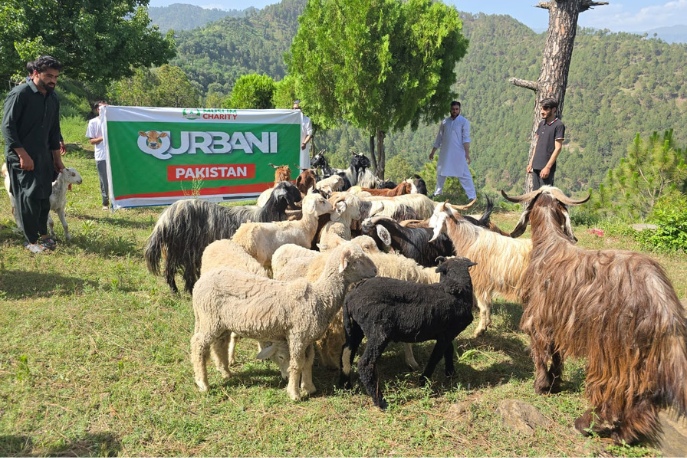
/
What are the rules of Qurbani?
$

Qurbani Rules 2026 – Complete Guide

Qurbani is the act of sacrificing an animal during Eid al-Adha as an act of worship and obedience to Allah. It is performed by eligible Muslims during the Islamic month of Dhul Hijjah.


This guide explains the rules of Qurbani in 2026, helping you understand how to fulfil this important obligation correctly. Whether you are giving Qurbani for the first time or want to ensure everything is done properly, it is important to follow the correct guidelines.


In this guide, you will learn:


  • Who should give Qurbani, including the basic eligibility criteria
  • When Qurbani must be performed, based on the Islamic calendar
  • The key rules to follow, including animal requirements and distribution


Understanding these rules helps ensure your Qurbani is valid and accepted. By following the correct steps, you can fulfil your religious duty with confidence and make sure your sacrifice reaches those in need.


What Are the Rules of Qurbani?

Qurbani must be performed according to specific Islamic guidelines to ensure it is valid and accepted. These rules cover who is required to give Qurbani, when it should be performed, what animals can be used, how the sacrifice is carried out and how the meat should be distributed.


Understanding these basic rules helps Muslims fulfil their obligation correctly while ensuring the benefits of Qurbani reach those in need.


The key rules of Qurbani include:


  • Who needs to give Qurbani - Qurbani is required for every adult Muslim who is financially able. Those who meet the Nisab threshold are expected to perform Qurbani according to some scholars.
  • When it must be done - Qurbani must be performed after the Eid al-Adha prayer on the 10th of Dhul Hijjah. It can be carried out over three days, ending on the 12th of Dhul Hijjah.
  • Which animals are allowed - Only certain animals are permitted, including goats, sheep, cows and camels. The animal must be healthy, meet age requirements and be free from defects.
  • How sacrifice should be done - The sacrifice must be carried out in accordance with Islamic principles. This includes using a sharp knife, treating the animal humanely and reciting “Bismillah Allahu Akbar” at the time of slaughter.
  • How meat is distributed - The meat should be shared between family, friends and those in need. A portion should be given to the poor to ensure the benefits of Qurbani are shared widely.


Who Needs to Give Qurbani?

Qurbani is required for every adult Muslim who meets certain basic conditions. It applies to individuals who have reached maturity, are of sound mind and possess enough wealth beyond their essential needs.


The key factor in determining who needs to give Qurbani is whether a person is financially able. This means having sufficient wealth or savings after covering basic living expenses such as food, clothing and housing.


A simple way to understand this is through the concept of Nisab. The Nisab threshold is the minimum amount of wealth a Muslim must have before certain acts of worship become obligatory.


In simple terms: If you are eligible to pay Zakat, you are required to give Qurbani (Hanafi view).


This includes both men and women. Qurbani is not limited to one per household. If multiple members of a family meet the criteria, each person should give their own Qurbani.


It is important to note that everyday necessities are not counted when assessing eligibility. Only surplus wealth is considered when determining whether someone meets the Nisab level.


Children are not required to give Qurbani and those who are unable to afford it are not obligated. Islam does not place hardship on those who do not have the means.


For those who are financially able, Qurbani is an important act of worship that should not be neglected. It is a way to fulfil a religious duty while also supporting those in need.


Understanding who should give Qurbani ensures that this obligation is fulfilled correctly and fairly, according to Islamic guidance.


Is Qurbani Compulsory in Islam?

Scholars differ on whether Qurbani is compulsory or strongly recommended, depending on the school of thought.


According to the Hanafi school of Islamic jurisprudence, Qurbani is considered obligatory (wajib) for Muslims who are financially able. This means that individuals who meet the Nisab threshold are required to perform Qurbani each year.


Other schools of thought, including Shafi’i, Maliki and Hanbali, consider Qurbani to be highly recommended (Sunnah Mu’akkadah). While not strictly compulsory, it is strongly encouraged and should not be neglected by those who can afford it.


Despite this difference, all scholars agree that Qurbani is an important act of worship with great spiritual value. It follows the example of Prophet Ibrahim (AS) and is a practice that has been observed by Muslims for generations.


For those who are financially able, performing Qurbani is strongly encouraged regardless of the school of thought they follow. It reflects obedience, gratitude and devotion to Allah.


If you are unsure, it is best to follow the guidance of trusted scholars or your local community.

When Should Qurbani Be Performed?


Qurbani must be performed during specific days in the Islamic calendar, from the 10th to the 12th of Dhul Hijjah. These are the days of Eid al-Adha, when Muslims around the world carry out the sacrifice.


The timing of Qurbani is essential for it to be valid. It must be performed after the Eid al-Adha prayer on the first day. Any sacrifice carried out before the prayer is not accepted as Qurbani.


Once the Eid prayer is completed, Qurbani can be performed over three days. Although all three days are valid, it is recommended to perform the sacrifice as early as possible.


The timing can be understood clearly as follows:


  • Start time - Qurbani begins after the Eid al-Adha prayer on the 10th of Dhul Hijjah. This is the earliest point at which the sacrifice can be carried out.
  • End time - Qurbani ends at sunset on the 12th of Dhul Hijjah. After this, the time period for Qurbani has passed and it is no longer valid.


Because the Islamic calendar follows the lunar cycle, the exact dates according to the Gregorian calendar change every year. There may also be slight differences between countries due to moon sighting. You can check the expected UK dates in the When is Qurbani 2026 guide to stay updated. [Link]


Following the correct timing ensures your Qurbani is valid and accepted, while also allowing it to be carried out within the blessed days of Eid.


Which Animals Are Allowed for Qurbani?

Only certain animals are allowed for Qurbani in Islam. These include goats, sheep, cows, buffaloes and camels, each must meet specific conditions to be valid for sacrifice.


A goat or sheep is considered one full Qurbani and is sufficient for one person. This is the most common option for individuals or families.


Larger animals such as cows, buffaloes or camels can be shared by multiple people. Up to seven individuals can share one cow, buffalo or camel, with each person receiving the reward of one Qurbani. This makes it a more affordable option, especially for those who want to fulfil their obligation at a lower cost.


Regardless of the type of animal, it must be healthy, free from major defects and meet the minimum age requirement. Animals that are weak, sick or visibly injured are not suitable for Qurbani.


It is also important that the animal is treated with care and sacrificed according to Islamic guidelines during the days of Eid al-Adha.


Many people choose to give Qurbani through reputable charities to ensure that these conditions are properly followed. This helps guarantee that the sacrifice is valid and that the meat is distributed to those who need it most.


Understanding which animals are allowed ensures your Qurbani is carried out correctly and in line with Islamic principles.


Conditions for a Valid Qurbani Animal

For Qurbani to be valid, the animal must meet specific conditions set out in Islamic guidelines. These rules ensure that the sacrifice is acceptable and carried out properly.


The key conditions for a valid Qurbani animal are:


  • Minimum age - Each animal must reach a minimum age before it can be used for Qurbani. A goat or sheep should be at least one year old, while a cow must be at least two years old. Camels should be at least five years old. 
  • Healthy condition - The animal must be in good health and fit for sacrifice. It should not be weak, extremely thin or unable to walk properly. Healthy animals ensure that the Qurbani is performed with dignity and in line with Islamic principles.
  • Free from defects - The animal must not have any major defects. This includes being blind in one or both eyes, severely injured or missing significant parts such as ears or limbs. Animals with obvious illnesses or physical damage are not suitable for Qurbani.
  • Ownership and care - The animal should be properly owned and cared for before the sacrifice. It must not be stolen or obtained unlawfully. Ensuring proper ownership is part of fulfilling the rules correctly.
  • Humane treatment - The animal must be treated with kindness and respect at all times. It should not be harmed or distressed before the sacrifice. Islam places strong emphasis on compassion towards animals.


Following these conditions ensures that your Qurbani is valid, ethical and accepted. It also reflects the true spirit of Qurbani, which is based on sincerity, care and obedience to Allah.

How Should Qurbani Be Performed?

Qurbani must be performed according to specific Islamic guidelines to ensure the sacrifice is valid, respectful and humane. These rules focus on both the method of slaughter and the treatment of the animal.


Following the correct process is essential to fulfil the religious requirements and maintain the dignity of the act.


The key rules for performing Qurbani include using a sharp knife to ensure a quick and clean cut. This minimises pain and suffering for the animal, which is an important part of Islamic teachings on compassion for animals. The animal should not be slaughtered in front of other animals. This helps reduce fear and distress, ensuring the process is carried out calmly and respectfully. The animal must be treated with kindness before and during the sacrifice. It should be handled gently, given water if needed and not subjected to unnecessary harm or stress.


In addition to the above rules, the sacrifice must be carried out during the correct days of Eid al-Adha and by someone who understands the proper method.


Many people choose to give Qurbani through trusted organisations to ensure these guidelines are followed correctly and consistently.


Following these steps ensures your Qurbani is valid, ethical and carried out in accordance with Islamic principles.


How Is Qurbani Meat Distributed?

The distribution of Qurbani meat is an important part of the sacrifice and reflects the values of sharing, generosity and supporting others. Islam encourages that the benefits of Qurbani are not kept for oneself alone, but shared with others.


A commonly followed Islamic method is the three-part rule, which divides the meat into equal portions:


  • Family - One portion is kept for yourself and your household. This allows you and your family to take part in the blessings of Qurbani and celebrate Eid al-Adha.
  • Friends - Another portion is shared with relatives, neighbours and friends. This strengthens relationships and spreads joy within the community during Eid.
  • Poor - A significant portion is given to the poor and those in need. This ensures that vulnerable families, who may not be able to afford meat, can also benefit from Qurbani.


In addition to personal distribution, many people choose to give their Qurbani through reputable charities. This allows for charity distribution to the needy, especially in regions where poverty and food insecurity are high.


Through organised distribution, reputable charities ensure that the meat reaches those who need it most, including orphans, widows and families living in hardship.


By sharing Qurbani meat in this way, Muslims fulfil both a religious duty and a social responsibility, helping to spread compassion and support across communities.


Qurbani Rules for Families

Qurbani rules apply to individuals, not households. This means each person is responsible for their own Qurbani based on their financial situation.


For married couples, both the husband and wife must give separate Qurbanis if they are financially able. Qurbani is not shared automatically within a family. If both meet the Nisab threshold, each person should offer their own sacrifice.


This is an important point, as some people assume one Qurbani covers the entire household. In reality, the obligation is based on individual eligibility, not family size.


Children are not required to give Qurbani, as they are not considered financially responsible. However, parents may choose to give Qurbani on behalf of their children as a voluntary act, but this is not obligatory.


In larger families, this means the number of Qurbanis depends on how many individuals meet the financial criteria. For example, if both parents are eligible, they should each give one Qurbani. Adult children who are financially independent and meet the requirements should also give their own.


Understanding these rules helps ensure that Qurbani is performed correctly within the family. It also prevents confusion and ensures that each eligible person fulfils their responsibility properly.


Can You Give Qurbani for Someone Else?

Yes, you can give Qurbani on behalf of another person. This includes both living individuals and those who have passed away.


For living people, Qurbani can be given as a gift or on behalf of a family member. However, if the person is financially able, they should ideally perform their own Qurbani. Giving on their behalf is usually done as an additional act of charity.


It is also common to give Qurbani on behalf of deceased loved ones. This is a way to continue giving charity in their name and for them to earn reward from your actions. Many people choose to offer Qurbani for parents or relatives who have passed away.


In both cases, the intention (niyyah) should be made clearly for the person on whose behalf the Qurbani is given.


Giving Qurbani for someone else is a meaningful act that combines charity and remembrance, allowing you to share blessings with others while fulfilling an important act of worship.
What Happens If You Miss Qurbani?

Qurbani must be performed within the specific days of Eid al-Adha, from the 10th to the 12th of Dhul Hijjah. If these days pass and Qurbani has not been carried out, it cannot be performed later as Qurbani.

This means the act of sacrifice is limited to a fixed time, and once that time has passed, the opportunity is missed for that year.

However, if someone was required to give Qurbani but did not do so, they can still give charity as compensation. While this does not replace Qurbani itself, it helps support those in need and fulfils a form of giving.

If the Qurbani was missed unintentionally, such as due to delay or oversight, giving charity is recommended. For those who were not financially able at the time, there is no obligation.

Understanding the importance of timing helps ensure that Qurbani is performed correctly. Planning and booking early can help avoid missing the required days.

If in doubt, it is best to seek guidance from a knowledgeable source or local scholar.


Important Sunnah Practices During Qurbani

In addition to the main rules, there are important Sunnah practices that Muslims are encouraged to follow during Qurbani. These practices help increase reward and ensure the act is carried out with the right intention and mindset.

  • Avoid cutting hair and nails - It is recommended for those intending to give Qurbani to avoid cutting their hair and nails from the start of Dhul Hijjah until the sacrifice is completed. This practice is a Sunnah and reflects a state of devotion during these blessed days. 
  • Intention (Niyyah) - Having a sincere intention is essential. Qurbani should be performed purely for the sake of Allah, not for showing off or personal recognition. A clear intention ensures that the act is accepted and rewarded.
  • Importance of Dhul Hijjah - The first ten days of Dhul Hijjah are among the most sacred days in Islam. Good deeds performed during this time carry great reward. Alongside Qurbani, Muslims are encouraged to increase acts of worship such as prayer, charity, fasting and remembrance of Allah.

These Sunnah practices help deepen the spiritual meaning of Qurbani. They remind Muslims that the sacrifice is not only about the act itself, but about faith, sincerity and devotion during these blessed days.

Following these practices allows you to maximise the reward of your Qurbani while strengthening your connection with Allah.


Why Donate Qurbani Through Muslim Charity?

Choosing the right organisation for your Qurbani is important to ensure your sacrifice is carried out correctly and reaches those who need it most.

Muslim Charity ensures that all Qurbanis are implemented according to Islamic guidelines and principles at every stage. From selecting healthy animals to performing the sacrifice correctly and within the designated days, every step is handled with care and responsibility.

Your Qurbani is distributed to the most needy and vulnerable communities, including families living in poverty, orphans and those affected by crisis. For some families, this may be the only time they receive fresh meat throughout the year.

With a strong focus on proper distribution, Muslim Charity works with local teams to ensure meat is shared fairly and reaches those who need it most. This helps maximise the impact of your donation and ensures dignity for recipients.

By giving through a trusted organisation, you can have peace of mind knowing your Qurbani is managed professionally and delivered effectively.

? Donate your Qurbani with confidence


CONCLUSION

Fulfil your Qurbani correctly and ensure your sacrifice reaches those who need it most. By giving through a trusted and reputable charity like Muslim Charity, which has been implementing Qurbanis for more than 25 years, you can be confident that your Qurbani is carried out according to Islamic guidelines and distributed to vulnerable communities.

As Eid approaches, demand increases and availability becomes limited so please book early to avoid disappointment.

Don’t leave it to the last moment. Act now to make a meaningful difference.

? Donate Your Qurbani Now

FAQs

Scholars differ on whether Qurbani is compulsory. The Hanafi school of Islamic jurisprudence considers it obligatory for those who are financially able, while other schools regard it as highly recommended. Despite this difference, it is a significant act of worship that should not be neglected by those who can afford it.

Qurbani is to be given by an adult Muslim who is financially able and meets the Nisab threshold. This includes both men and women who have wealth beyond their basic needs. Each eligible individual is responsible for their own Qurbani.

Nisab is the minimum amount of wealth a Muslim must possess before certain obligations apply. It is similar to the threshold used for Zakat. If your savings or assets exceed this level, you are considered financially able to give Qurbani.

Each eligible person must offer one Qurbani. It is not one per household, so if multiple family members meet the criteria, each should give separately. This ensures the obligation is fulfilled individually.

A goat or sheep counts as one Qurbani for one person only. However, a cow or camel can be shared by up to seven people, with each share counting as a separate Qurbani. This makes it a practical option for many.

Yes, Qurbani can be given on behalf of another person, including family members or loved ones who have passed away. It is a meaningful way to give charity in their name. However, those who are financially able should still perform their own Qurbani.

Animals allowed for Qurbani include goats, sheep, cows, buffaloes and camels. These animals must meet specific conditions related to age, health and suitability. Choosing the correct animal is essential for a valid Qurbani.

The animal must meet the minimum age requirement and be in good health. It should not be weak, blind or have any major defects. These conditions ensure the sacrifice is valid and carried out properly.

Qurbani must be performed after the Eid al-Adha prayer on the 10th of Dhul Hijjah. It can be carried out over three days, ending at sunset on the 12th of Dhul Hijjah. Performing it within this time is essential for validity.

If Qurbani is missed during the designated days, it cannot be performed later as Qurbani. Instead, charity can be given to support those in need. However, this does not replace the original act of Qurbani.

Sign Up To Our Newsletter

Success! Thanks for signing up for the newsletter! We'll be in touch soon.
Warning! You are already subscribed.
Donation Added

No donations in the cart

CHECKOUT

Please select your country:

We'd like to keep you updated about our projects and fundraising activities. Please confirm if you are happy for Muslim Charity to contact you via:

Turn that into $0

Increase your donation by 25% at no extra cost.

Gift Aid

*I would like Muslim Charity to treat all donations I have made in the past, this donation and all my future donations until I notify otherwise as Gift Aid donations. I am a UK taxpayer and understand that if I pay less Income Tax and/or Capital Gains Tax that the amount of Gift Aid claimed on all my donations I that tax year it is my responsibility to pay any difference. Please inform Muslim Charity if you want to cancel the declaration, change your name or address or no longer pay sufficient tax. The Gift Aid amount claimed will be used towards fundraising/administrative costs as well as our Where Most Needed fund to save and transform more lives.

Chat with us WhatsApp 1

loader.gif Please Wait