What is Qurbani? Meaning, Story & Importance in Islam
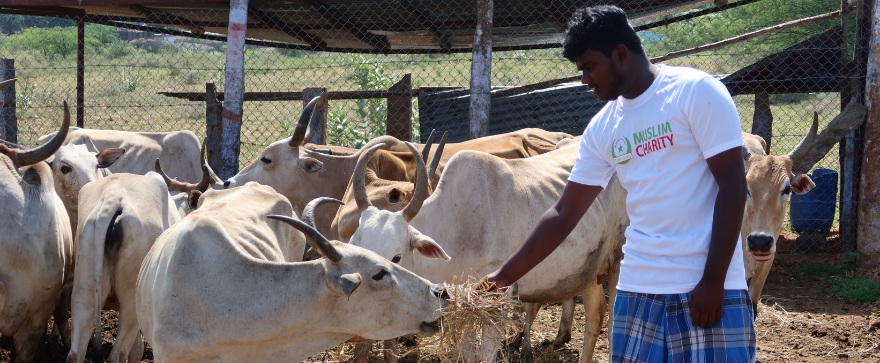
Qurbani is the act of sacrificing an animal during Eid al-Adha as an act of worship and obedience to Allah. It is performed by eligible Muslims each year during the Islamic month of Dhul Hijjah.
Qurbani takes place after the Eid prayer and continues over three days, from the 10th to the 12th of Dhul Hijjah. It is an important part of Eid al-Adha and is observed by Muslims around the world.
This act of sacrifice commemorates the devotion of Prophet Ibrahim (AS), who was willing to sacrifice his son in obedience to Allah’s command. Allah replaced his son with a ram, and this moment is remembered through Qurbani every year.
Qurbani is not only about the act of sacrifice, but also about intention, faith and submission to Allah. It reminds Muslims of the importance of trust, patience and gratitude.
The meat from Qurbani is shared between family, friends and those in need. For many vulnerable communities, this may be the only time they receive fresh meat throughout the year.
By performing Qurbani, Muslims fulfil a key religious duty while also supporting those facing hardship. It is a powerful act that combines worship, charity and compassion during the days of Eid al-Adha.
What is Qurbani in Islam?
Qurbani in Islam is the act of sacrificing an animal during Eid al-Adha as a form of worship and obedience to Allah. It is performed every year during the Islamic month of Dhul Hijjah, after the Eid prayer.
This act follows the Sunnah of Prophet Ibrahim (AS), who showed complete submission to Allah. Qurbani is a reminder of faith, sacrifice and devotion, it holds great spiritual significance for Muslims around the world.
Qurbani is performed by adult Muslims who are financially able to do so. This means those who meet a certain level of wealth, known as Nisab, are required or strongly encouraged to give Qurbani depending on scholarly opinion.
Each eligible individual should offer one Qurbani, which can be a small animal such as sheep or goat, or a share in a larger animal such as a cow. The sacrifice must be carried out during the specified days of Eid al-Adha and follow Islamic guidelines.
The meat is then distributed, with a portion given to those in need. This ensures that even the most vulnerable can take part in the blessings of Eid.
Qurbani in Islam is not only a religious obligation but also a way to support communities and promote compassion, generosity and social responsibility.
What Does Qurbani Mean?
The word Qurbani comes from the Arabic word “Qurban”, which means to come closer or to seek nearness. In Islam, Qurbani represents an act of devotion that brings a person closer to Allah through sacrifice and obedience.
This meaning goes beyond the physical act of sacrificing an animal. It reflects sincerity, faith and the willingness to submit to Allah’s commands. Qurbani is a reminder that true devotion is shown through actions, intention and trust in Allah.
Another term often used is “Udhiya”, which refers to the specific sacrifice carried out during Eid al-Adha. While the terms Qurbani and Udhiya are used interchangeably, they both describe the same act of sacrifice performed during the days of Dhul Hijjah.
At its core, Qurbani symbolises closeness to Allah, compassion for others and the importance of sharing blessings. It combines worship with charity, as the meat is distributed to those in need.
Through Qurbani, Muslims are reminded that true sacrifice is not just about giving, but about strengthening their relationship with Allah.
The Story Behind Qurbani (Prophet Ibrahim AS)
The story behind Qurbani comes from one of the most powerful and emotional tests of faith in Islamic history, experienced by Prophet Ibrahim (AS).
One night, Prophet Ibrahim (AS) saw a dream in which he was sacrificing his beloved son, Ismail (AS). As a Prophet, he knew that this was not an ordinary dream, but a command from Allah. This was a test of complete obedience, trust and submission.
Despite the deep emotional difficulty, Prophet Ibrahim (AS) did not ignore the command. Instead, he approached his son and shared the vision with him. In a moment that reflects incredible faith, Ismail (AS) responded with patience and trust, telling his father to do as he had been commanded.
Together, they prepared to fulfil this act. A father ready to sacrifice his son, and a son willing to be sacrificed — both showing complete submission to the will of Allah. This moment highlights the strength of their belief and their unwavering devotion.
As Prophet Ibrahim (AS) was about to carry out the sacrifice, Allah intervened. In His mercy, He replaced Ismail (AS) with a ram, sparing his life and rewarding both father and son for their sincerity and obedience.
This event is mentioned in the Qur’an in Surah As-Saffat (37:102–107), where Allah honours their faith and accepts their devotion.
Qurbani today is a reflection of this story. It is not just about sacrificing an animal, but about remembering the values of obedience, patience and trust in Allah.
The story of Prophet Ibrahim (AS) reminds Muslims that true faith requires sacrifice. It teaches believers to put Allah above all else, even in the most difficult situations.
Each year during Eid al-Adha, Muslims carry out Qurbani to honour this moment. It serves as a reminder of faith, gratitude and the importance of submission to Allah’s will.